A pharmaceutical company can have strong products, experienced professionals and established capabilities, yet its website may still make the business difficult to evaluate.
The problem is often not obvious. The website may have a modern design, plenty of pages and a steady stream of visitors. But if someone cannot quickly understand what the company does, find relevant product information, verify its credibility or work out how to make an enquiry, the website is creating unnecessary friction.
These hidden gaps can affect more than appearance. They can influence user experience, organic visibility, engagement and the number of serious enquiries a website generates.
This is why pharmaceutical website design should be approached as a business and communication problem rather than simply a visual project. The content, structure, technology and search strategy all need to support the visitor’s journey.
Below are the most common gaps worth examining and practical ways to address them.
1. Visitors Cannot Tell What the Company Actually Does
The homepage has a difficult job: it needs to give visitors enough context to understand the business without overwhelming them.
A common problem is vague positioning. Phrases such as “innovative solutions” or “committed to excellence” may sound polished, but they do not necessarily explain the company’s actual capabilities.
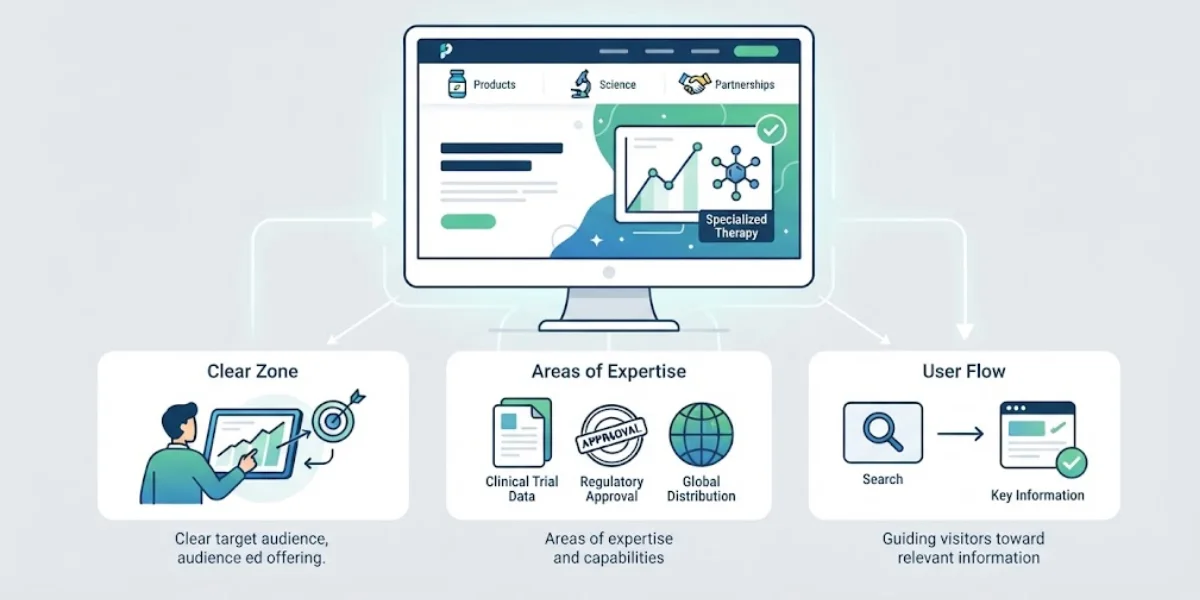
A visitor should be able to identify the company’s main offering, audience and areas of expertise without having to search through several pages.
The solution is not simply adding more content. It is about making the existing message more specific, organized and useful. A clear homepage should explain what the company does, highlight its key capabilities and guide visitors toward the most relevant information.
Businesses reviewing their site can also use this guide to common pharmaceutical website problems to identify gaps that may be affecting clarity, usability and trust.
2. Product Pages Do Not Give Buyers Enough Information
Once visitors understand the company, they often need to investigate a particular product, service or capability.
This is where weak pharmaceutical website content can become a major obstacle.
A short description may tell someone what a product is, but not answer the questions they need before taking the next step. Important details may be scattered across PDFs, old pages or unrelated sections.
Each important product or service page should be built around the information its intended audience needs.
Depending on the business, that might include relevant specifications, applications, supporting documentation, company capabilities, frequently requested information or an appropriate enquiry route.
Content should remain accurate and understandable. Scientific and product-related claims should receive suitable expert review, particularly where accuracy or regulatory considerations apply.
The objective is not to make every page longer. It is to eliminate information gaps that force visitors to search elsewhere.
3. Important Information Is Buried Across the Site
Even useful information loses value when visitors cannot locate it.
A website may have detailed product pages, company information and useful resources, but complicated menus can make those assets difficult to discover. Generic navigation labels and inconsistent page structures can create the same problem.
This is primarily an information architecture issue.
A better structure groups related information logically and uses labels that describe what visitors will actually find. Internal links should also connect pages that naturally belong together.
For example, a capability page can point visitors toward relevant services or supporting resources rather than leaving them to return to the main menu.
The test is simple: Can a relevant visitor reach an important piece of information without having to guess where it is?
If the answer is no, the website structure needs attention.
4. Trust Signals Are Missing Where Decisions Are Made
A pharmaceutical brand website needs to give visitors reasonable ways to understand who is behind the business and why its information should be taken seriously.
Trust can weaken when a website makes significant claims without explaining their basis, provides limited company information or presents credentials that are difficult to verify.
Pharmaceutical website credibility can be supported through transparent company details, accurate descriptions of expertise, appropriate references, genuine certifications and clearly presented professional information where relevant.
The placement of trust information also matters.
A visitor evaluating a service should not have to leave that page and search through the entire website to understand the company’s relevant experience. Supporting evidence should appear close to the claims or decisions it helps explain.
At the same time, credibility should not become a collection of decorative badges or exaggerated statements. Clear, verifiable information is more useful than excessive promotional language.
5. The Website Creates Friction on Mobile Devices
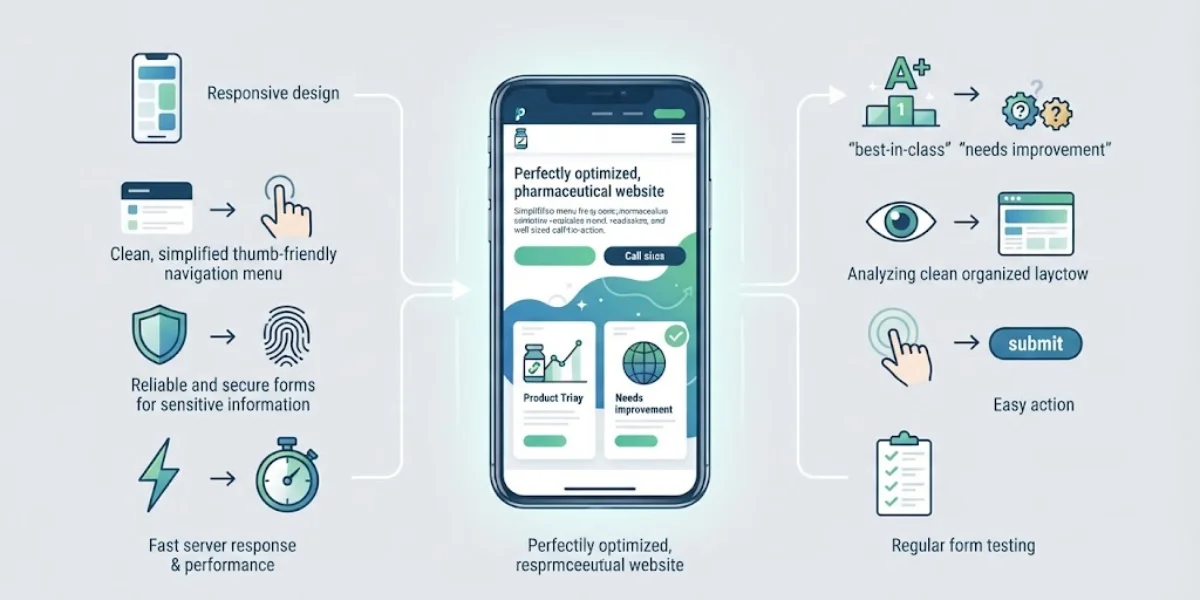
A pharmaceutical website may look fine on desktop but become difficult to use on phones and tablets. Small text, complicated menus, oversized images, awkward forms and horizontal scrolling can quickly frustrate visitors.
Strong pharmaceutical web development should provide responsive layouts, accessible navigation, reliable forms and consistent performance across devices.
Heavy images, unnecessary scripts and slow server responses should also be reviewed as part of pharmaceutical website optimization.
When assessing the experience, it can help to compare how the best pharmaceutical websites organize information, present content and make important actions easy to complete.
Forms should also be tested regularly, particularly when visitors are expected to submit business or sensitive information.
6. Search Traffic Lands on Pages That Do Not Answer Intent
Getting a page indexed is not the same as satisfying the person who finds it.
One of the less visible pharmaceutical website SEO problems is a mismatch between search intent and landing-page content.
Someone searching for a pharmaceutical manufacturer may need company capabilities and manufacturing information. Someone researching a particular product may need substantially different information. A person looking for a service may be closer to making an enquiry and need practical details instead.
If all these searches lead to generic pages, visitors may not find what they expected.
A stronger SEO approach connects search intent with dedicated, useful pages.
Areas worth reviewing include:
- Whether important pages target a clearly defined information need.
- Whether titles and headings accurately describe the content.
- Whether internal links establish useful relationships between pages.
- Whether pages provide original information instead of generic industry copy.
- Whether technical problems prevent search engines from accessing important content.
Pharmaceutical SEO services can help identify these gaps and create a more organized search strategy.
However, SEO is not an instant traffic system. Search engines need to crawl, index and evaluate changes, and results vary according to competition, site history, content quality and many other factors.
7. Enquiry Paths Make Visitors Work Too Hard
Not every website visitor is ready to contact a company immediately.
Some may be researching. Others may be comparing capabilities or looking for additional information before starting a conversation.
The website should support these different stages instead of forcing everyone toward the same generic Contact Us button.
A page should make its next step appropriate to its purpose.
For example, a service page may need a business enquiry option, while an informational resource may guide visitors toward related material. A product page might provide a suitable route for requesting further information where appropriate.
The important point is clarity.
Visitors should understand what action they can take and, where relevant, what happens after they take it.
This turns a pharmaceutical brand website from a collection of information into a more useful business communication tool.
8. Old Information Can Undermine a Current Brand
Websites change more slowly than businesses.
A company may update its services, products, facilities, team, contact information or documentation while older pages continue to display outdated details.
This can create contradictions that visitors notice when researching the organization.
Regular content maintenance should therefore be part of the website strategy.
Important pages can be reviewed for outdated claims, broken links, obsolete documents, inaccurate company information and inconsistent terminology.
Where scientific, product or regulatory information is involved, the review process should include appropriate subject-matter expertise.
This is also where pharmaceutical website best practices become practical rather than theoretical. A strong website is not simply launched and forgotten; it needs an appropriate process for remaining accurate and useful.
9. A Redesign Alone Will Not Fix Structural Problems
When a website underperforms, a visual redesign can be tempting.
A new layout may improve appearance, but it will not automatically fix weak content, poor information architecture, search-intent mismatches or difficult enquiry journeys.
Before redesigning every page, businesses should determine what is actually causing the problem.
A professional website improvement process can begin with an assessment of the existing website and then prioritize issues according to their effect on users and business objectives.
This may involve:
- Reviewing the current website structure and important visitor journeys.
- Identifying content that is missing, unclear or outdated.
- Examining technical performance and mobile usability.
- Reviewing search visibility and landing-page relevance.
- Improving navigation and internal linking.
- Restructuring enquiry paths.
- Developing a realistic implementation and maintenance plan.
This approach makes pharmaceutical website improvements more purposeful because each change has a defined reason.
For companies considering a larger project, pharmaceutical website design services and development should be planned together so the final website is visually consistent, technically sound and easy to maintain.
10. What Should Be Fixed First?
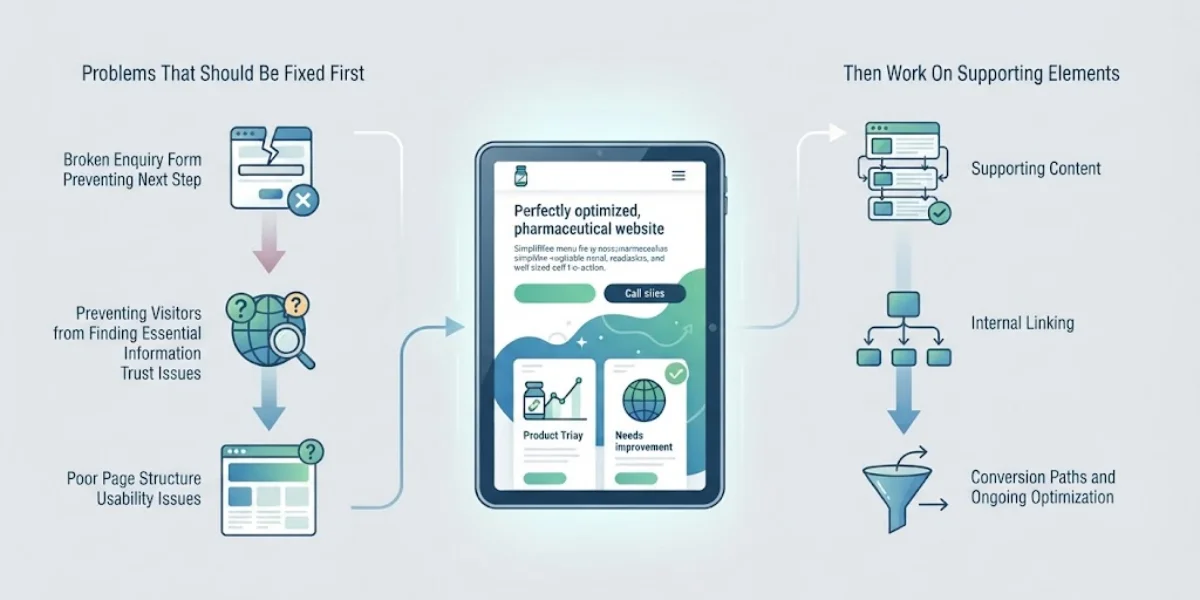
Not every website problem needs the same level of attention. A broken enquiry form can directly affect potential business, while a minor visual issue may have little impact on the visitor journey.
Likewise, improving an important product page may be more useful than publishing several low-value articles.
Start with the problems that prevent visitors from understanding the company, finding essential information, trusting the website or taking the next step. Then work on supporting content, internal linking, conversion paths and ongoing optimization.
A well-planned improvement process should also consider how design supports usability, credibility and business goals. Reviewing examples of the best website design for clinics can provide useful perspective when evaluating page structure, navigation and user-focused design principles.
This creates a stronger foundation for pharmaceutical digital marketing because campaigns are sending visitors to a website that is prepared to inform and support them not simply generate more visits.